
Search Manitowoc Felony Records
Manitowoc Felony Records are easiest to find when you separate the city record trail from the county felony file. If you are trying to confirm a case, identify the filing office, or request an official copy, start with the public court summary and then move to the office that actually holds the record. In Manitowoc, that means the county clerk for felony cases, the municipal court for city ordinance matters, and the police records division for incident-side material that can help you narrow a search. The location matters, but the record type decides where the record lives and how you obtain it.
For a city-level visual reference, the approved Manitowoc Police Department image is here: Manitowoc Police Department Records Division.
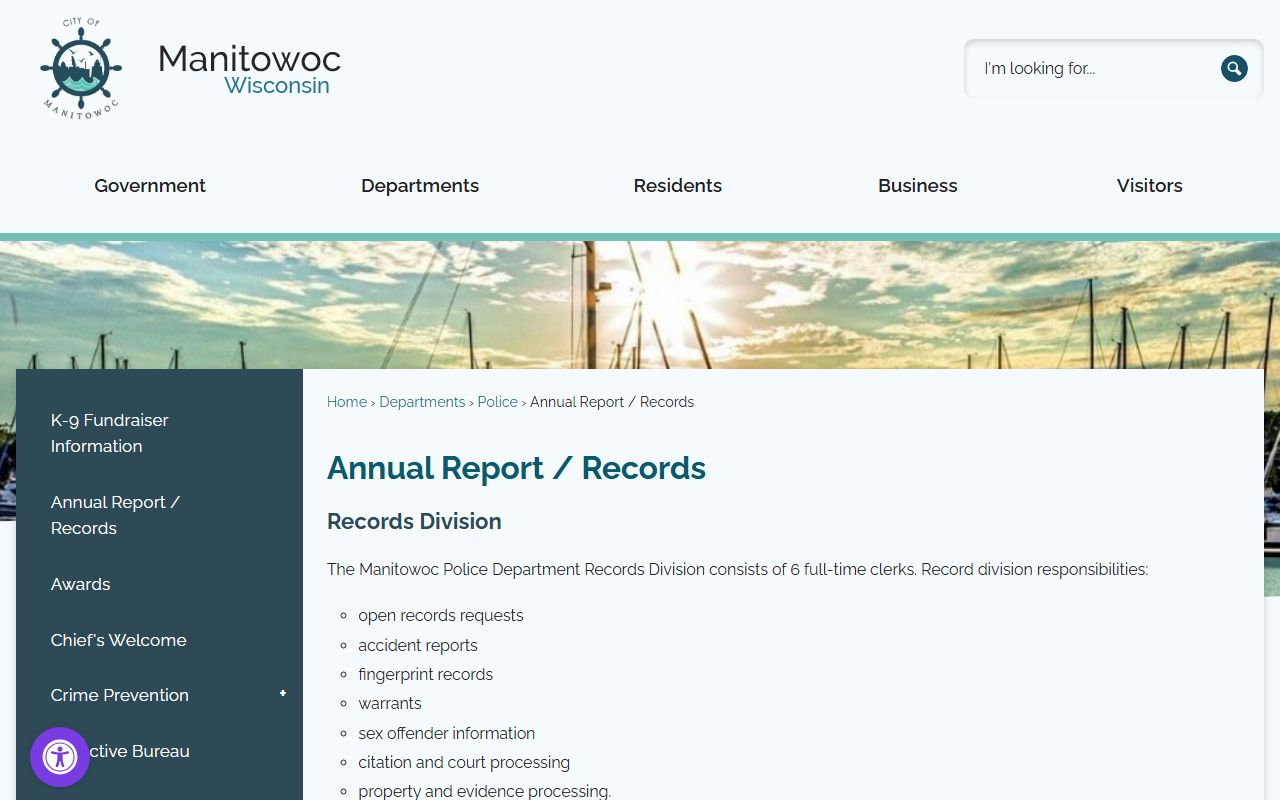
The police records division is a useful starting point when you need an incident report, a warrant reference, or another local record that helps connect the city event to the county case. It is not the felony file itself, but it often points you to the right name, date, or case number before you move on to the courthouse.
Manitowoc Felony Records Search Paths
Wisconsin Circuit Court Access is the official statewide portal for public court summaries, and it is the quickest way to see whether a Manitowoc felony case exists in the circuit system. The portal lets you search by party name, case number, county, and date of birth. It also shows whether the case is tied to Manitowoc County, which helps you avoid confusing a felony file with a municipal matter. If you only know part of a name, the public search still gives you a clean place to begin.
WCCA is only the starting point. It shows the public summary entered by court staff, not the complete retained file. That difference matters because older cases may show less detail, and records that are not open to public inspection do not appear at all. For Manitowoc Felony Records, the portal is most valuable when you want to confirm that a file exists, identify the correct county, and collect enough details to make a smarter request at the courthouse.
The city and county record trails can overlap in the same search, but they are not interchangeable. A citation or municipal case can help you find the path to a felony file, yet the felony record itself belongs with the circuit court. When you know that from the start, the search becomes much faster because you are using the public summary to lead you to the right official office instead of trying to force one database to do everything.
Manitowoc Municipal Court and Felony Records
Manitowoc Municipal Court handles municipal ordinances adopted from Wisconsin statutes, and it keeps records of dispositions and payment of forfeitures. That court is important because it explains the city side of the record trail, but it is not where felony cases are filed. Initial appearances are scheduled for traffic offenses at 8:30 a.m. and ordinance violations at 9:15 a.m., and pre-trials are scheduled by telephone on the first Tuesday of each month.
The approved Manitowoc Municipal Court page image below shows the city court side of the search and helps separate it from the county felony file.
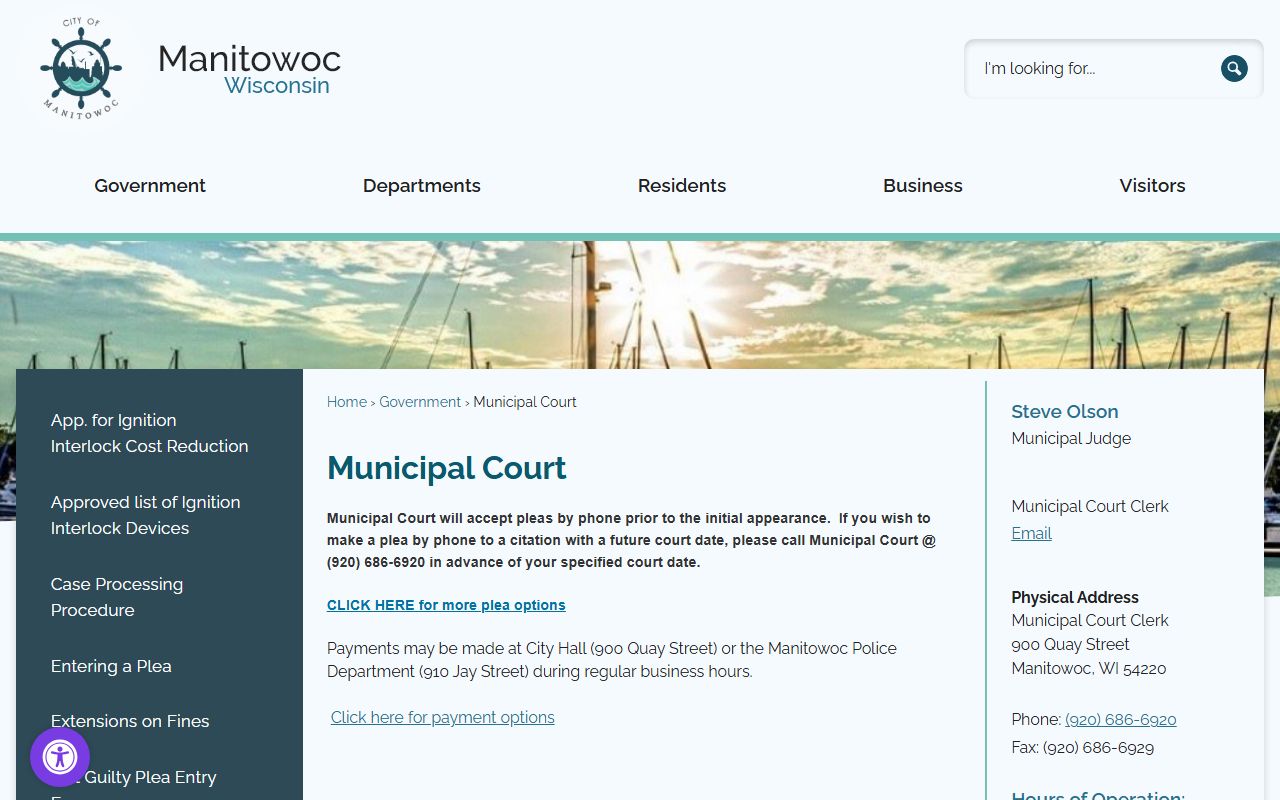
That visual fit is useful because ordinance matters stay with the municipal court while felony cases move to the county.
That schedule matters when you are trying to figure out whether a city matter has any connection to a later county case. If your search starts with a citation or ordinance issue, the municipal court can tell you where the city file sits and how the court handles appearances. If the matter is a felony, though, you still need the county circuit court file. The municipal court can clarify the front end of the record trail, but it does not replace the felony record source.
For Manitowoc Felony Records, municipal court is best thought of as a boundary marker. It helps you separate city ordinance enforcement from circuit court prosecution. That distinction reduces wasted time, especially when a person has both a city citation and a county case. A search that keeps those records separate is much easier to trust because each result stays tied to the office that actually created it.
Manitowoc Felony Records and Police Requests
Manitowoc Police Department Records Division handles open records requests, accident reports, fingerprint records, warrants, sex offender information, citation and court processing, and property and evidence processing. That range makes it a useful support office when you are trying to trace a local arrest or identify the case details that eventually point to the county felony file. It also means the police office is often the right place to begin if you need a report number, a citation reference, or a copy of a city incident record.
The police division is not a substitute for the court file. It can support the search, but it does not create the circuit court judgment record. If you are trying to obtain Manitowoc Felony Records, use the police records division to gather the local incident details and then move to the county clerk for the official case. That sequence is especially useful when the names are common or the first search returns several similar entries.
Because the records division also handles citation and court processing, it can serve as a bridge between the street-level event and the court file. That makes it a valuable official source when you need to confirm whether a police matter led to a municipal citation, a warrant, or a circuit court case. The value is in the connection, not in replacing the felony record itself.
Manitowoc Felony Records at the County Clerk
Manitowoc County Clerk of Circuit Court is the office that keeps the official felony file for Manitowoc County. The office is at Manitowoc County Courthouse, 1010 South 8th Street, Manitowoc, WI 54220, and the phone number is (920) 683-4030. The clerk is charged by statute with administration of and record keeping for the circuit courts, which makes it the office you need once WCCA has shown you the case or given you enough information to make a request.
That office also gives you the practical details that matter when you want a usable copy. Paper copies are $1.25 per page, certification is $5 per document, and a name search is $5 per name. Those fees help you plan the request before you visit or call. If the public portal gives you a case number, bring it. If not, a full name, a rough filing year, and any related citation or arrest detail can help the clerk narrow the file.
For Manitowoc Felony Records, the county clerk is the point where a search becomes a record request. WCCA can confirm the existence of the case, but the clerk handles the retained file and the copy process. That is why the county office matters so much if you need something certified, if you need a paper copy for a court matter, or if you want to verify details that are not visible in the public summary.
Manitowoc Felony Records Copies and Limits
When you move from a search to a copy request, it helps to understand that the public portal and the courthouse serve different purposes. WCCA gives you the statewide summary view, while the county clerk gives you the official retained record. The two together are the cleanest path for Manitowoc Felony Records because they let you confirm the case online and then request the file from the office that owns it. If the online result is thin, that does not always mean the record is gone. It may simply mean the public summary is shorter than the paper file.
Retention rules also matter. Wisconsin felony records are generally kept for 50 years, and Class A felony records are kept for 75 years. That long retention window means older Manitowoc cases can still be available even when the online entry looks sparse. If a name search turns up more than one result, compare the case number and county carefully before deciding which entry belongs to your file. A different middle initial or a second name form can create a separate WCCA entry without creating a separate case.
For the most efficient search, keep the office roles clear. The police records division supports the local incident trail, the municipal court handles city ordinance matters, and the county clerk holds the felony file. Once you know which record you need, the rest of the process is usually straightforward. That is the advantage of starting with the public summary and finishing with the office that actually keeps the record.