
Search Wisconsin Felony Records
Wisconsin Felony Records are usually found by starting with the statewide court search and then moving to the county clerk of circuit court that keeps the official file. That process works because felony cases are filed at the county circuit court level even when the incident began with a city police department or a municipal court citation. If you need to confirm a case, check the filing history, or obtain copies, Wisconsin gives you a clear record path. Start with the public case summary, confirm the county, and then use the local clerk office when the online result is not enough.
Wisconsin Felony Records Overview
Wisconsin Felony Records Search
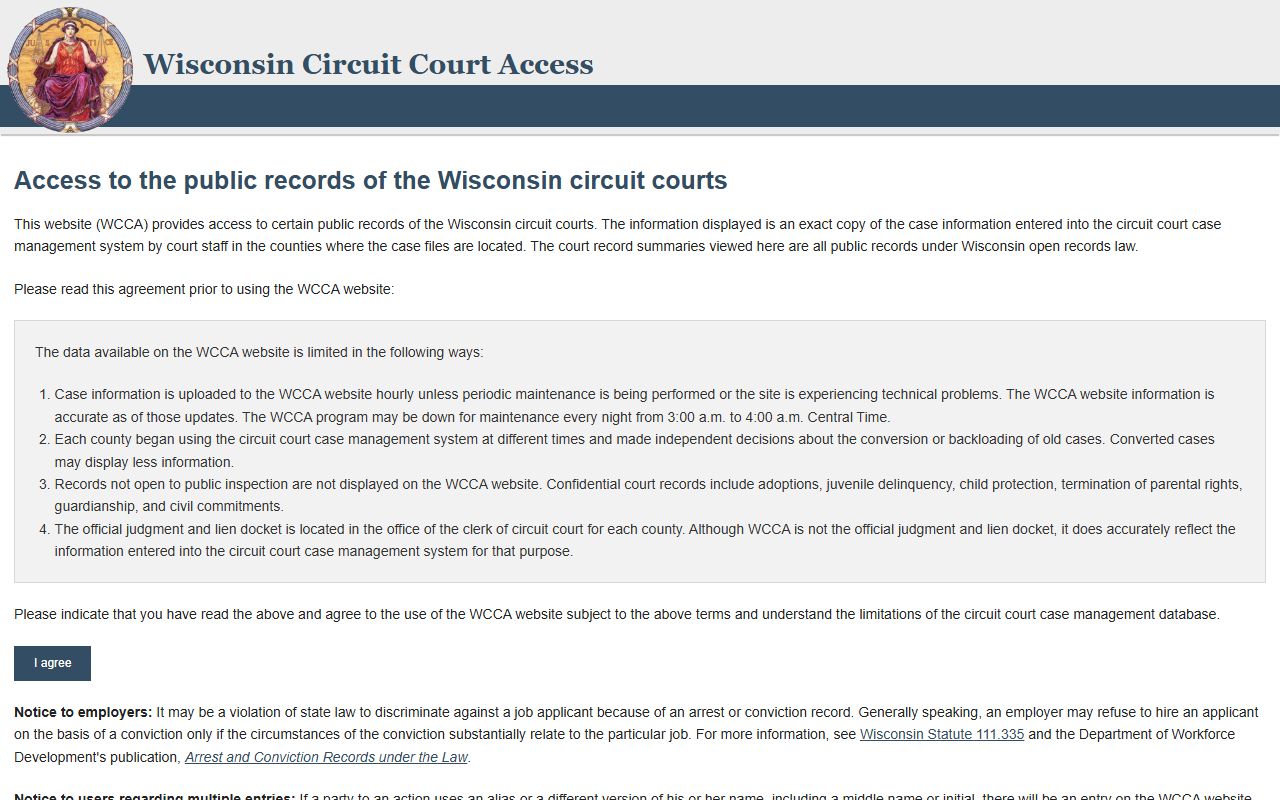
Wisconsin Circuit Court Access, often called WCCA or CCAP, is the primary public starting point for Wisconsin Felony Records. The site provides free public access to circuit court case summaries across the state. You can search by party name, case number, county, business name, or date of birth. The case information shown there is copied from the circuit court case-management system used by county court staff, which is why it remains the fastest official way to confirm whether a felony case is in the public system before you contact a courthouse.
The WCCA image below fits this step because it shows the statewide portal that most felony record searches use first before moving into a county clerk request.
That statewide reach matters because Wisconsin uses county circuit courts for felony filings. A case tied to Milwaukee, Madison, Green Bay, Kenosha, or a smaller county still follows the same basic path. The city may help explain where the incident began, but the felony case itself sits in the county court structure. That is why this site is organized two ways. The county pages help you reach the actual clerk office that holds the file, while the city pages help you understand where municipal court, police, and county court boundaries separate.
WCCA is a public summary, not the full record. It can show the filing, party details, case status, hearings, judgments, and other public entries, but it does not normally display the complete document set. The official judgment and lien docket still sits with the clerk of circuit court in each county. That distinction is important. Wisconsin Felony Records are easiest to obtain when you treat WCCA as the first check, not the final answer. If you need a copy, a certification, or a closer file review, the county clerk is still the office that matters.
Wisconsin Felony Records in WCCA
WCCA updates hourly unless the system is down for maintenance or technical work. The research also notes a regular overnight maintenance window from about 3:00 a.m. to 4:00 a.m. Central Time. That means a thin result, a delay, or a missing update does not always mean the case is absent. Sometimes it means the portal is between uploads or the county converted older records differently than newer ones. Each county adopted the circuit court case-management system at its own pace, which is one reason older cases can show less detail than recent filings.
Retention is another reason the portal remains useful for serious case research. Wisconsin felony cases are generally retained on WCCA for 50 years, while Class A felony cases are retained for 75 years. That long public window makes the statewide portal valuable even when the case is old. It also explains why older Wisconsin Felony Records may still appear online despite a short or incomplete case summary. The case can still exist in the county file even when the public portal shows only part of what happened.
There are limits. Records not open to public inspection do not appear in WCCA. Wisconsin also removed dismissed criminal cases, acquitted criminal cases, and certain other matters from CCAP after two years under a 2018 records-display change. That means a missing case is not always evidence that nothing happened. It can mean the matter was removed from public display under the portal policy, or that the case is confidential by law. Alias use can also create multiple entries for the same file, so the safest habit is always to compare the case number before assuming one name equals one case.
The statewide DOJ record-check image and CIB image also belong in this part of the page because they show a separate state criminal-history path. They do not replace court files, but they help explain that Wisconsin Felony Records can be searched through more than one official state system depending on whether you need a court docket or a state-held criminal-history record.
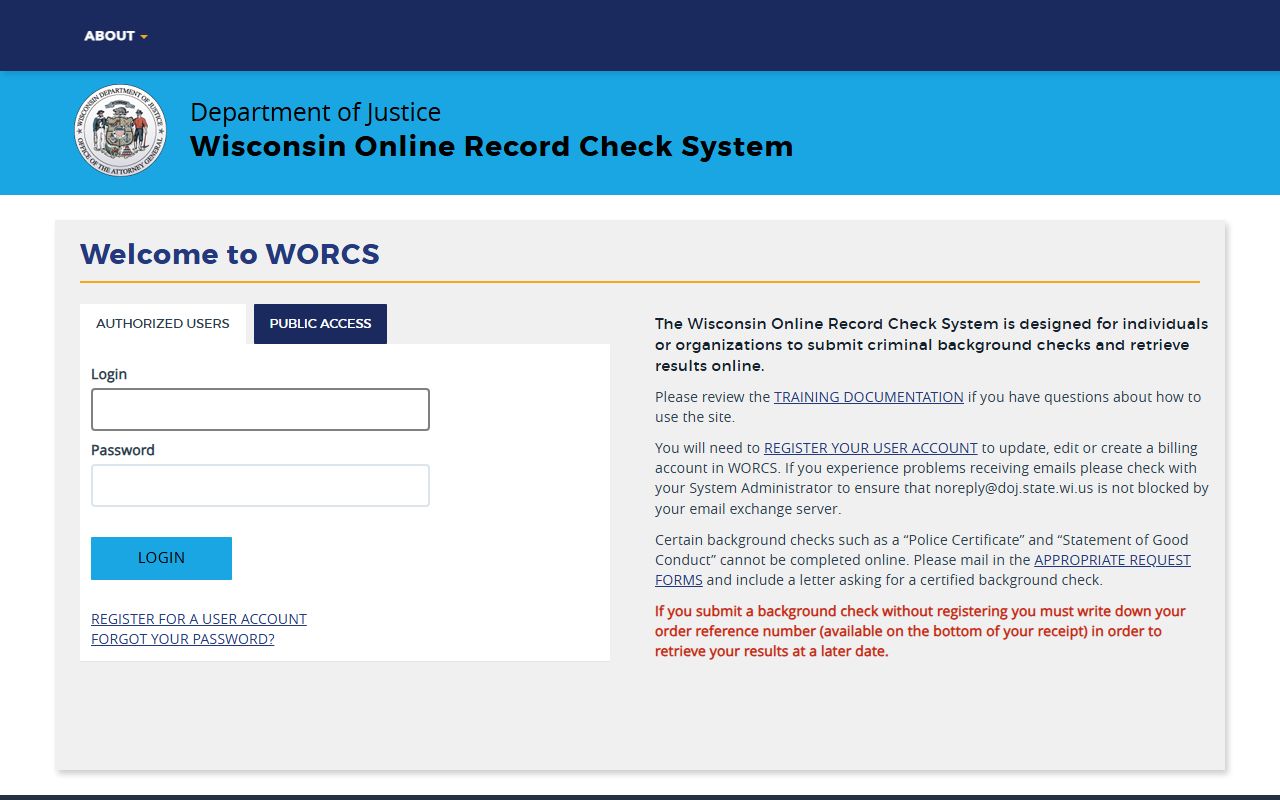
The DOJ portal above is different from WCCA. WCCA is the public court index. The DOJ search below reflects the Wisconsin Crime Information Bureau side of the state record structure, which is useful when you need to understand the difference between a court case and a state criminal-history repository.
Note: WCCA is the best public search tool in Wisconsin, but it is still only the public summary. The official county file remains with the clerk of circuit court.
County Clerks and Wisconsin Felony Records Requests
Once you know the county, the next step is the clerk of circuit court. Every Wisconsin county keeps its own court files through that office. The clerk handles the official court record, the local copy request process, and the practical details that do not always appear in WCCA. That includes certified copies, older paper files, archived records, and county-specific request methods. Some counties prefer in-person requests. Others accept mail, fax, or email. Many counties charge $1.25 per page for copies and $5 for certified documents, but the exact details can vary enough that the county page is still worth checking before you make the request.
The county pages on this site are built around that local variation. A county like Waukesha has off-site retrieval timing and emergency retrieval charges spelled out on its records page. A county like Washburn gives clear fax, email, and mail instructions for requests. Winnebago provides a dedicated records contact line and records email. Sheboygan specifies the written criminal records request process and copy charges. Those differences are the reason Wisconsin Felony Records are not just one statewide task. The public portal is statewide, but the file request is local.
If you are not sure where the case belongs, use the county and city guides together. A Milwaukee or West Allis case still goes through Milwaukee County Circuit Court for felony records. A Fitchburg or Sun Prairie case goes through Dane County. Appleton runs through Outagamie County. Oshkosh runs through Winnebago County. The city pages help with that orientation. The county pages then tell you how the actual record request works once you know which courthouse owns the file.
Wisconsin Felony Records Access Rules
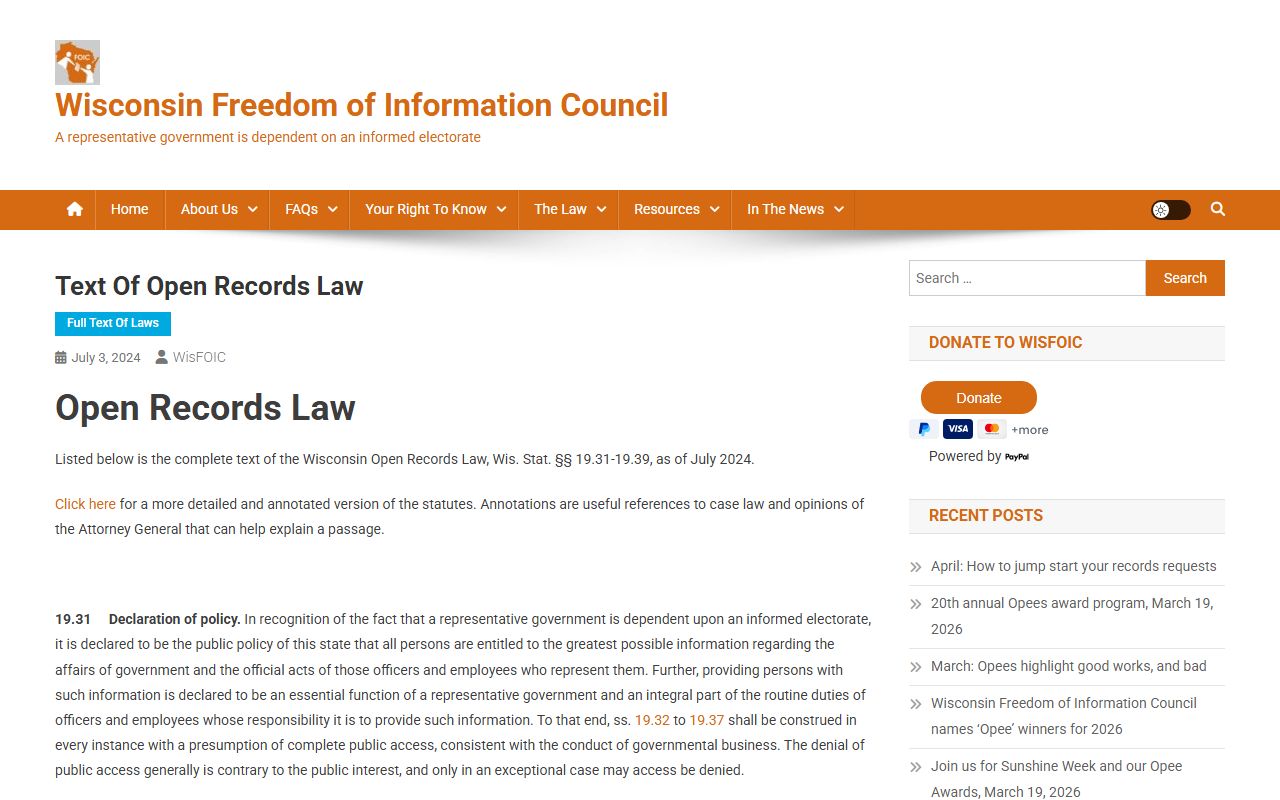
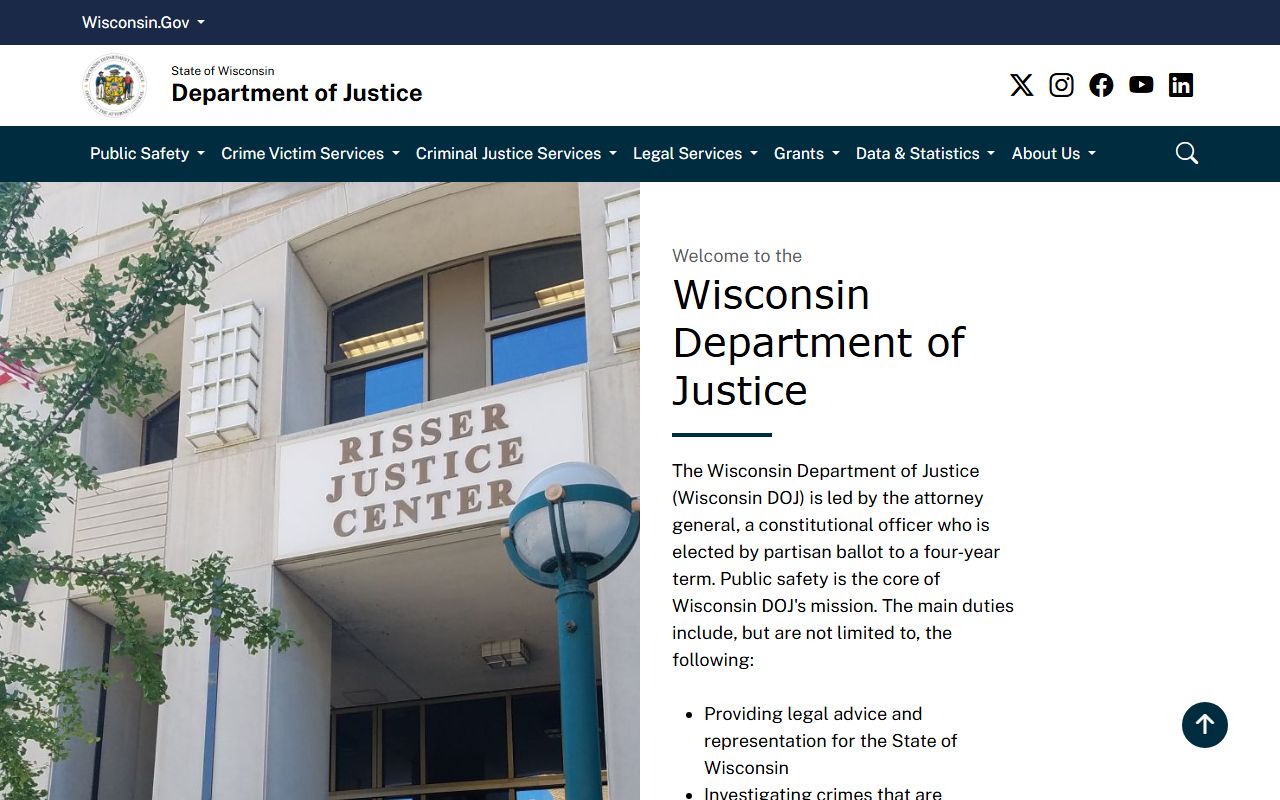
Public access in Wisconsin is shaped by Wis. Stat. 19.35, which gives a requester the right to inspect or receive copies of public records unless another law says otherwise. That statute explains why court records can be requested and why agencies can still apply limits for confidential material. It also explains why copy fees, mailing charges, and certain records-processing costs can appear in a county request. The Wisconsin Department of Justice Office of Open Government is the main statewide source for general public-records guidance when a request turns into a broader access question.
The public-records law image belongs here because it reflects the statewide access rule behind many Wisconsin Felony Records requests. The DOJ Office of Open Government image follows it because that office explains how Wisconsin public-records access works when the question moves beyond one clerk counter.
That public access rule does not mean every felony-related record appears in exactly the same way. WCCA omits confidential matters. County clerks may control the official record even when only part of the file is visible online. Law-enforcement records may follow a different release path than court records. A police report, an arrest log, a jail record, and a circuit court file can all be related to the same event without being the same record. This is why county and city pages matter. They show which office controls which part of the public record trail.
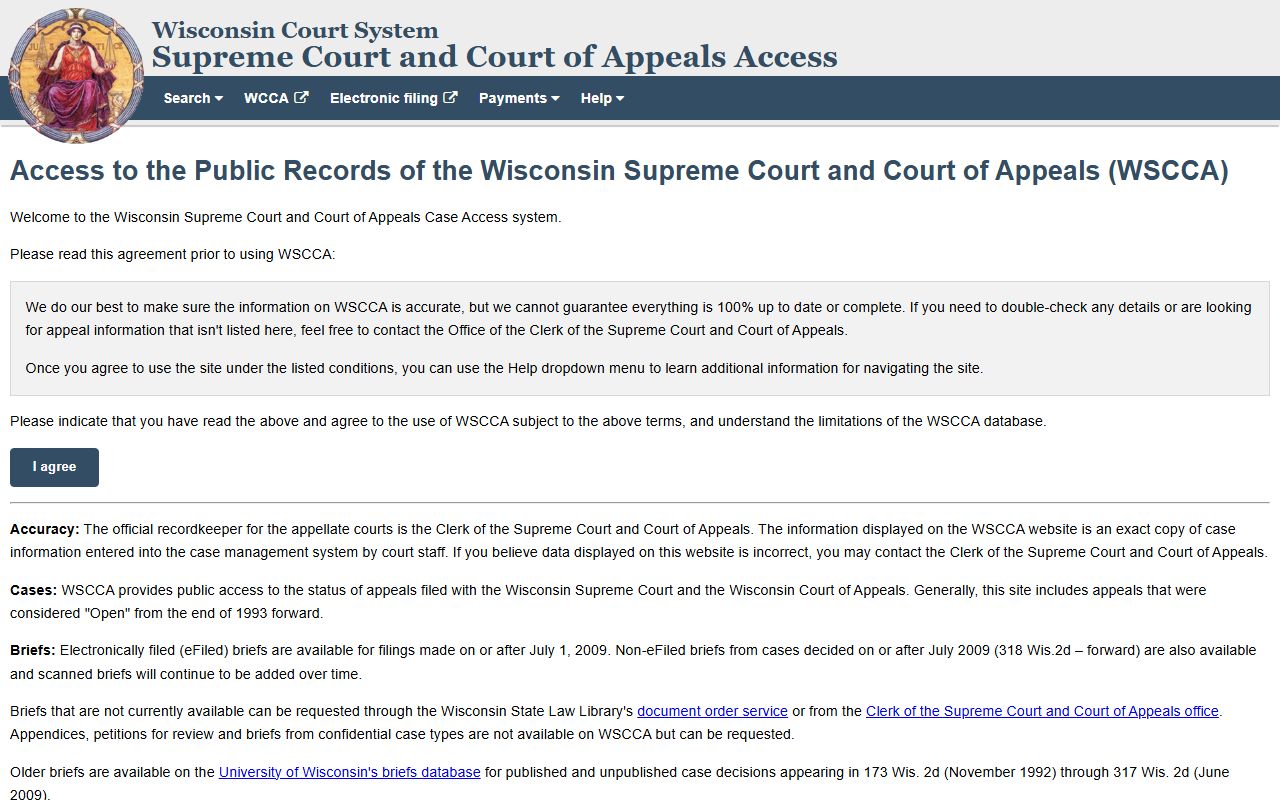
Wisconsin Felony Records also become more complicated when a case moves beyond circuit court. If the matter was appealed, the official statewide appellate portal is Wisconsin Supreme Court and Court of Appeals Case Access. That portal is separate from WCCA and covers appellate cases rather than the county trial-court file. If you need procedure help rather than a records answer, the Wisconsin Court System Self Help Center is the official statewide court guide that explains forms, searches, and general court processes.
The appellate image below fits that transition because it marks the statewide portal people use when a felony matter has already moved past the county circuit court and into the appeals system.
Wisconsin Felony Records Beyond the Court File
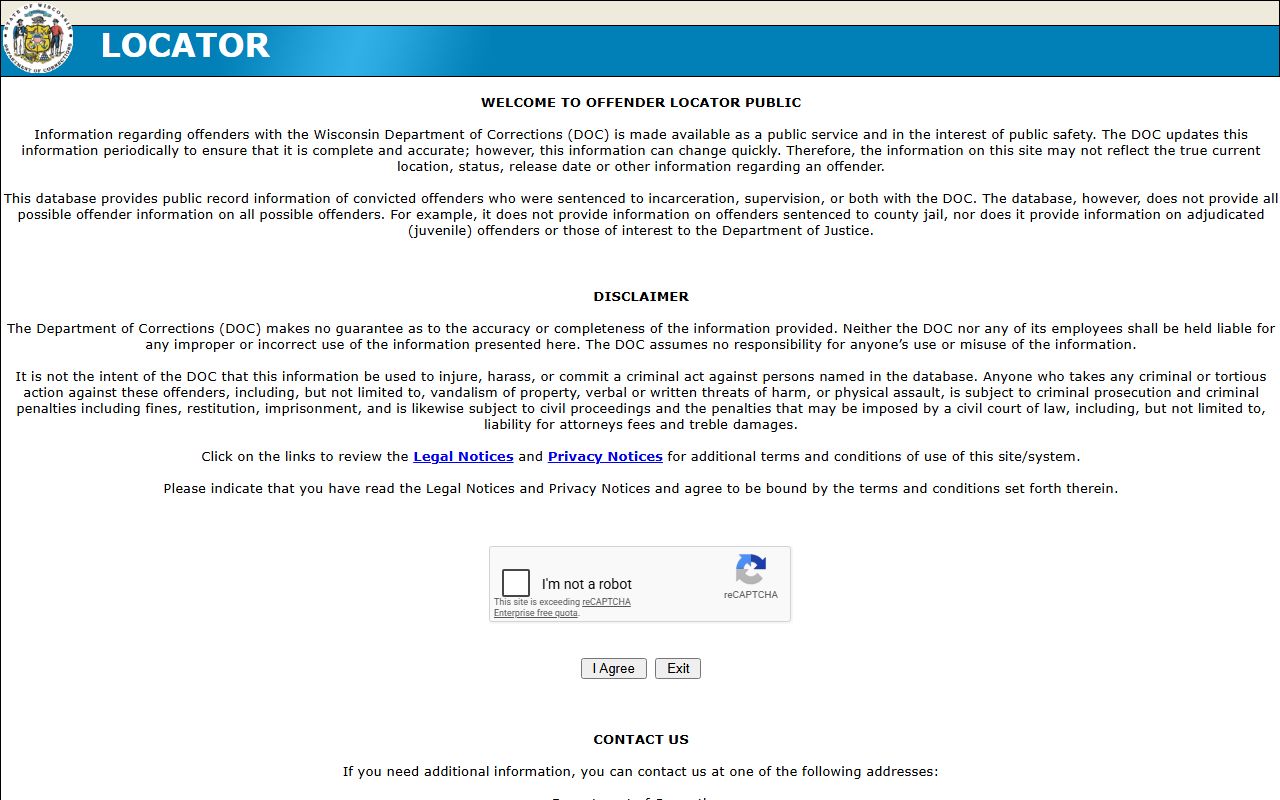
Some searches do not stop with the court record. After a felony conviction, the incarceration or supervision trail may move into the Wisconsin Department of Corrections system. When that happens, the Wisconsin DOC Offender Locator can help confirm state prison or supervision status. That tool is useful because it covers offenders sentenced to incarceration, supervision, or both with the state DOC. It does not replace county jail records or the court file, but it can help explain where the case went after sentencing.
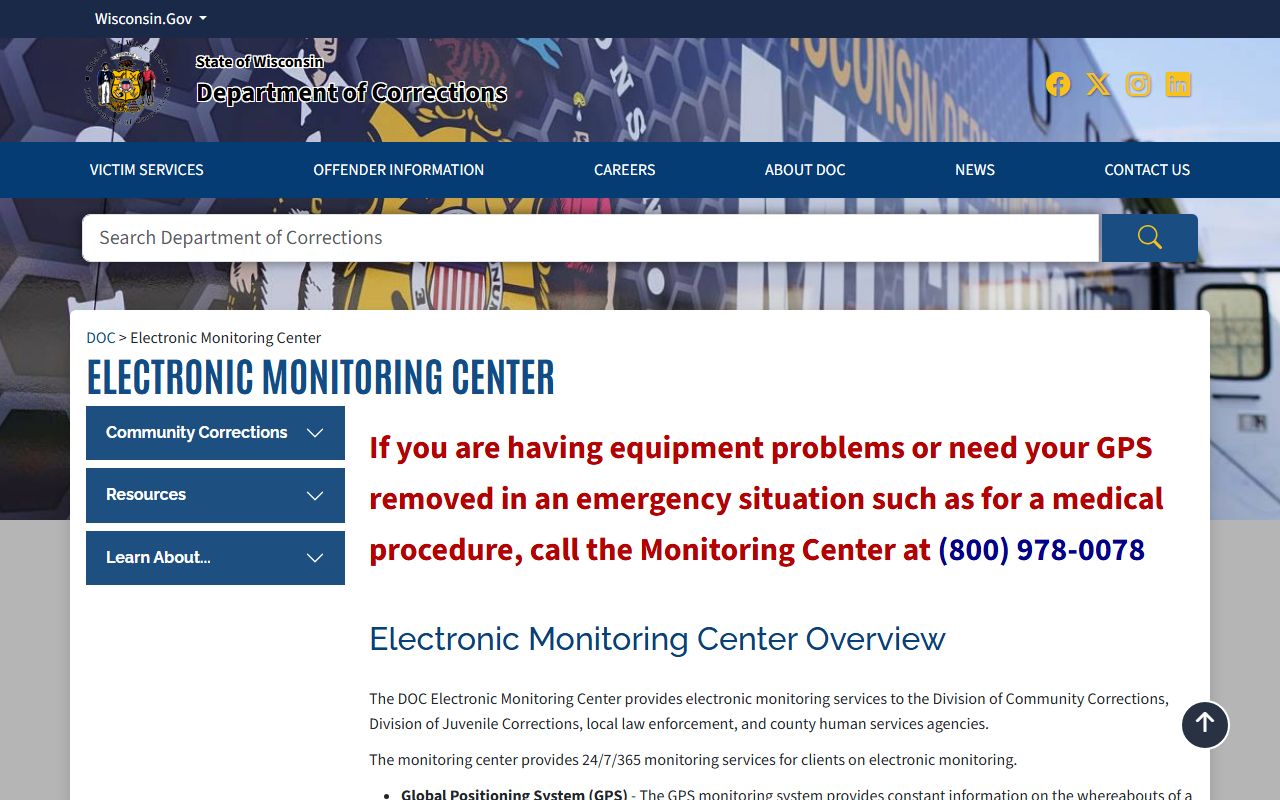
The DOC offender locator image fits this part of the page because it reflects the state supervision and incarceration lookup that often follows the court case. The electronic monitoring image also belongs here because some Wisconsin records searches involve supervision status rather than only the filed court documents.
The Wisconsin State Law Library’s criminal records guide is another useful statewide reference because it pulls together the official court systems, county resource directories, and related state agencies in one place. It is a better statewide roadmap than a generic search because it points you back to county clerks, sheriffs, and court systems rather than to low-quality record summaries. When a Wisconsin Felony Records search reaches a dead end, that law library page is often the best official place to reset the search and confirm which office should hold the next piece of the record.
The key is to match the question to the office. If you need the circuit court case summary, use WCCA. If you need the actual county file, use the clerk. If you need incarceration or supervision information after sentencing, use the DOC locator. If the search involves an appeal, use WSCCA. When each office stays in its own lane, the search becomes much easier to manage and far less likely to drift into unofficial sources.
Some record searches also need an agency directory or statewide contact point before the requester reaches the right local office. That is where the Wisconsin DOJ and law-enforcement network materials can help frame the search. They do not replace a court file, but they do help explain how statewide and local offices connect inside the Wisconsin Felony Records process.
Wisconsin Felony Records and Expungement
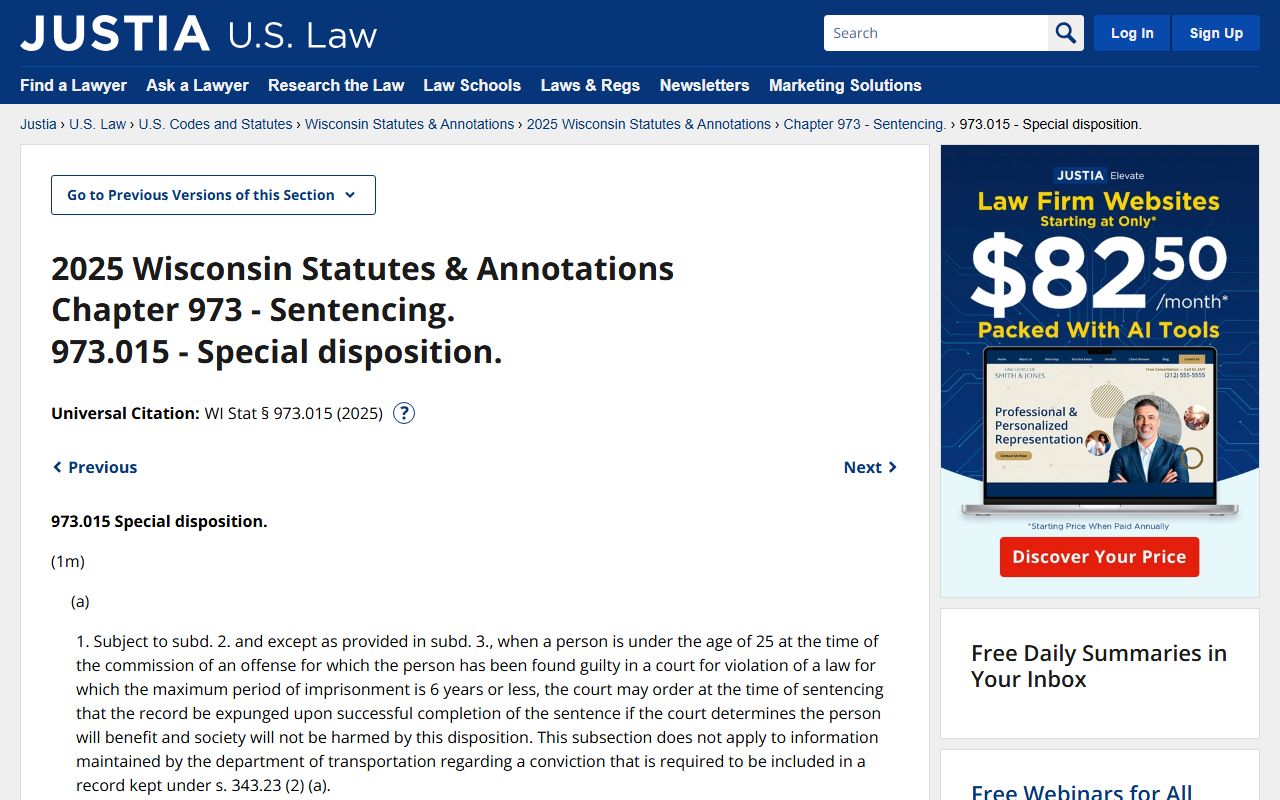
Expungement changes the way some Wisconsin Felony Records appear in public search systems, which is why it belongs on the statewide page. Wisconsin Stat. 973.015 controls when a court may order expungement in qualifying situations. The statute does not turn every conviction into a removable record, and it does not erase the need to confirm what happened in the county file. It does, however, help explain why one public search may show less than an older file review or why an expected case result may no longer appear in the same way.
The statute image below fits this section because it points directly to the statewide expungement rule that affects how some Wisconsin Felony Records are displayed or requested after sentencing and discharge.
That issue is one more reason to use the statewide and county tools together. A public portal can tell you what is visible today. The county clerk can explain what remains in the official file, what copy may still exist, and whether the case history is subject to a special access limit.
Browse Wisconsin Felony Records by County
County pages are the fastest way to reach the correct clerk of circuit court and county-specific records process. Use them when you already know the county where the felony case was filed, or when WCCA has already confirmed which county owns the file.
Wisconsin Felony Records in Major Cities
City pages help when the search starts with a municipality instead of a county. They explain where city police records, municipal court records, and county felony files separate so you can reach the right office faster.